 (406) 453-7000


 (406) 453-7000
When you manage a commercial property, the roof overhead is your first line of defense against severe weather, sudden temperature drops, and seasonal wear. Buying a commercial roof comes with a significant financial commitment, and most building owners count on a commercial roofing warranty to protect that bottom line. Yet, opening a warranty document can feel like reading fine print written in another language.
Understanding what your warranty covers—and where its protections end—can save you thousands of dollars when an issue arises. Let us break down how commercial roofing warranties work, what fine print to watch for, and how to keep your coverage fully intact.
What Key Insights Should Every Commercial Building Owner Know About Warranties?
Essential Warranty Basics
- Two distinct types of coverage exist: Commercial roofs rely on manufacturer warranties for material defects and contractor warranties for installation craftsmanship.
- Neglect voids coverage quickly: Skipping routine maintenance or failing to document inspections can instantly invalidate a claim.
- Weather limits apply: Standard warranties protect against normal weather patterns, but severe storms, hail, and high winds often require specialized riders.
- Record-keeping is vital: Keeping detailed service records and repair logs is required by most manufacturers if you ever need to file a claim.
What Types of Commercial Roofing Warranties Are Available?
Breaking Down Manufacturer and Workmanship Warranties
Not all commercial roofing warranties are created equal. Broadly speaking, coverage falls into two primary categories: material warranties provided by the manufacturer, and workmanship warranties provided by your installation team.
Manufacturer Material Warranties
A manufacturer warranty covers the roofing products themselves. If the membrane, insulation, or adhesive fails prematurely because of a defect in how it was made, the manufacturer covers the cost of replacing those defective materials. Basic material warranties often do not cover the labor costs required to perform the fix unless you upgrade to a No Dollar Limit (NDL) warranty. NDL agreements are premium manufacturer warranties that cover both parts and labor for covered repairs without capping the payout amount over the life of the roof.
Contractor Workmanship Warranties
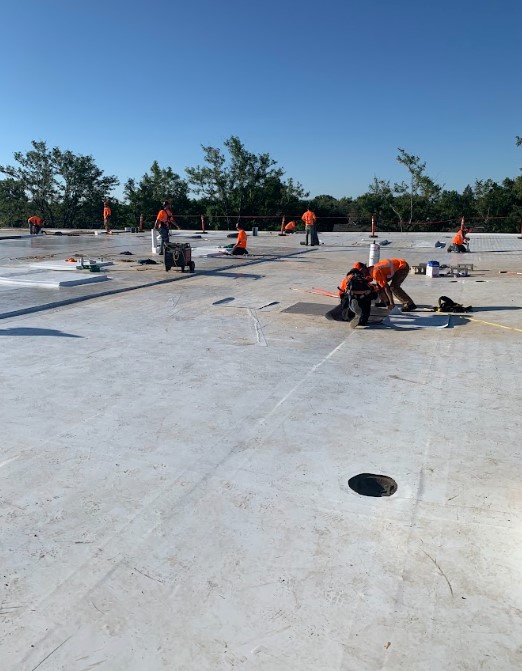
Even the best materials will fail if they are installed incorrectly. A contractor workmanship warranty covers errors made during the installation process. This includes improperly sealed seams, incorrectly flashed roof penetrations, or mistakes made around drains and gutters. Working with a verified commercial roofing contractor ensures your installation team stands firmly behind their labor.
What Is Typically Covered Under a Commercial Roof Warranty?
Understanding Standard Protections
When you invest in a new roofing system, standard warranty coverage helps safeguard your structure against specific structural issues that arise under normal operating conditions.
- Defective materials: Flaws in manufacturing, such as membrane splitting, blistering, or premature deterioration caused by poor manufacturing quality.
- Installation errors: Coverage for leaks caused by improper seam sealing, flashing mistakes, or incorrect attachment methods during the initial build.
- Labor costs (under NDL plans): Full payment for labor hours required to fix verified manufacturing or installation defects.
- Leak repairs: Direct repair costs for water intrusion caused by covered material failures or workmanship mistakes.
What Is Not Covered by a Commercial Roofing Warranty?
Spotting Common Exclusions and Red Flags
A warranty is not an insurance policy. It will not cover damage caused by external forces, lack of care, or unexpected events. Knowing what falls outside your agreement prevents costly surprises down the road.
| Exclusion Category | What It Means for Your Building |
|---|---|
| Severe Weather & Force Majeure | Tornadoes, microbursts, and extreme hail are usually handled by property insurance. |
| Unauthorized Alterations | Adding HVAC units or solar panels without written approval can void coverage. |
| Foot Traffic & Mechanical Damage | Punctures from trade workers servicing equipment on the roof are rarely covered. |
| Ponding Water | Standing water remaining 48 hours after rain can void membrane coverage if unaddressed. |
Many commercial roof failures stem from unauthorized modifications. If an HVAC technician punches a hole through your membrane to run new lines and fails to flash it correctly, your manufacturer warranty will likely be voided for that entire section of the roof.
How Can Building Owners Avoid Accidentally Voiding Their Roofing Warranty?
Actionable Steps for Protecting Your Investment
Keeping your warranty valid requires proactive management. Manufacturers require proof that the building owner cared for the roof throughout its lifespan.
- Schedule semi-annual roof inspections: Have a qualified roofer evaluate your system every spring and fall, as well as after major severe storm events.
- Keep a dedicated maintenance log: Store every invoice, inspection report, and repair document in a single secure folder.
- Hire qualified professionals for repairs: Never allow a general handyman or unauthorized contractor to patch your commercial membrane.
- Keep drains and gutters clear: Ensure water drains off the roof within 48 hours to prevent standing water issues.
- Notify manufacturers promptly: Report any leaks or repairs to the warranty provider within the time frame specified in your contract, which is often 30 days.
If your current roof is showing signs of age or minor leaks, scheduling a professional commercial roof repair service right away can help fix small issues before they spiral into total warranty disqualification.
Real-World Advice: How Do You Solve the Commercial Roof Warranty Puzzle?
Getting Straight Answers on Your Commercial Coverage
Reading warranty paperwork can leave anyone feeling like they are trying to solve a puzzle with half the pieces missing. You think you are fully covered, only to find out a minor leak caused by an unsealed vent pipe falls squarely on your shoulders. The real trouble starts when building owners assume a 20-year warranty means 20 years of zero maintenance.
The simple truth is that manufacturers make products, but people install them. You can buy the highest grade EPDM or TPO membrane on the market, but if the crew putting it down skips a step on seam prep or rushes the flashing around a rooftop unit, water will eventually find a way in. That is why partnering with an experienced team matters just as much as the paper warranty itself. Learn more about our team and our decades of experience in North Central Montana to see how dedicated craftsmanship makes all the difference.
Clear Answers on Commercial Roof Coverage
How Long Does a Typical Commercial Roof Warranty Last?
Most commercial manufacturer warranties run between 10 and 30 years, depending on the material thickness and system chosen. Workmanship warranties from contractors usually range from 2 to 10 years, though certified installers often offer extended labor coverage backed by top manufacturers.
Does a Commercial Roof Warranty Cover Hail and Wind Damage?
Standard warranties usually do not cover severe hail or winds that exceed normal design limits. Wind coverage is typically capped at specific miles-per-hour thresholds. Heavy storm damage, tree impacts, and hail destruction should be claimed through your commercial property insurance policy rather than your warranty. You can learn more about official roofing standards through industry organizations like the National Roofing Contractors Association.
Can I Transfer My Roofing Warranty if I Sell the Property?
In most cases, yes, but conditions apply. Many manufacturers allow a one-time warranty transfer to a new building owner within a specific time window after a sale. This process often involves a formal inspection, transfer paperwork, and a small administrative fee paid to the manufacturer.
What Is the Difference Between an NDL Warranty and a Standard Material Warranty?
A standard material warranty only covers the replacement cost of defective materials, leaving you responsible for labor fees. A No Dollar Limit (NDL) warranty covers both the materials and the full labor cost to complete the repair, without capping the financial payout over the term of the contract.
Secure Your Peace of Mind with A-1 Contractors, Inc.
A commercial roof is a major investment, and managing its warranty shouldn’t involve guesswork. Whether you need a thorough inspection, ongoing maintenance, or a complete system replacement, working with a certified local contractor ensures your roof stays protected year after year.
At A-1 Contractors, Inc., we bring over two decades of local expertise to every commercial building we serve across North Central Montana. As a certified GAF Master Elite contractor, we offer comprehensive manufacturer warranties—including 20-year No Dollar Limit options—and back our labor with dedicated workmanship guarantees.
Don’t wait for a small leak to turn into an uncovered repair bill. Reach out to A-1 Contractors, Inc. today to schedule your commercial roof inspection and keep your warranty coverage strong.